

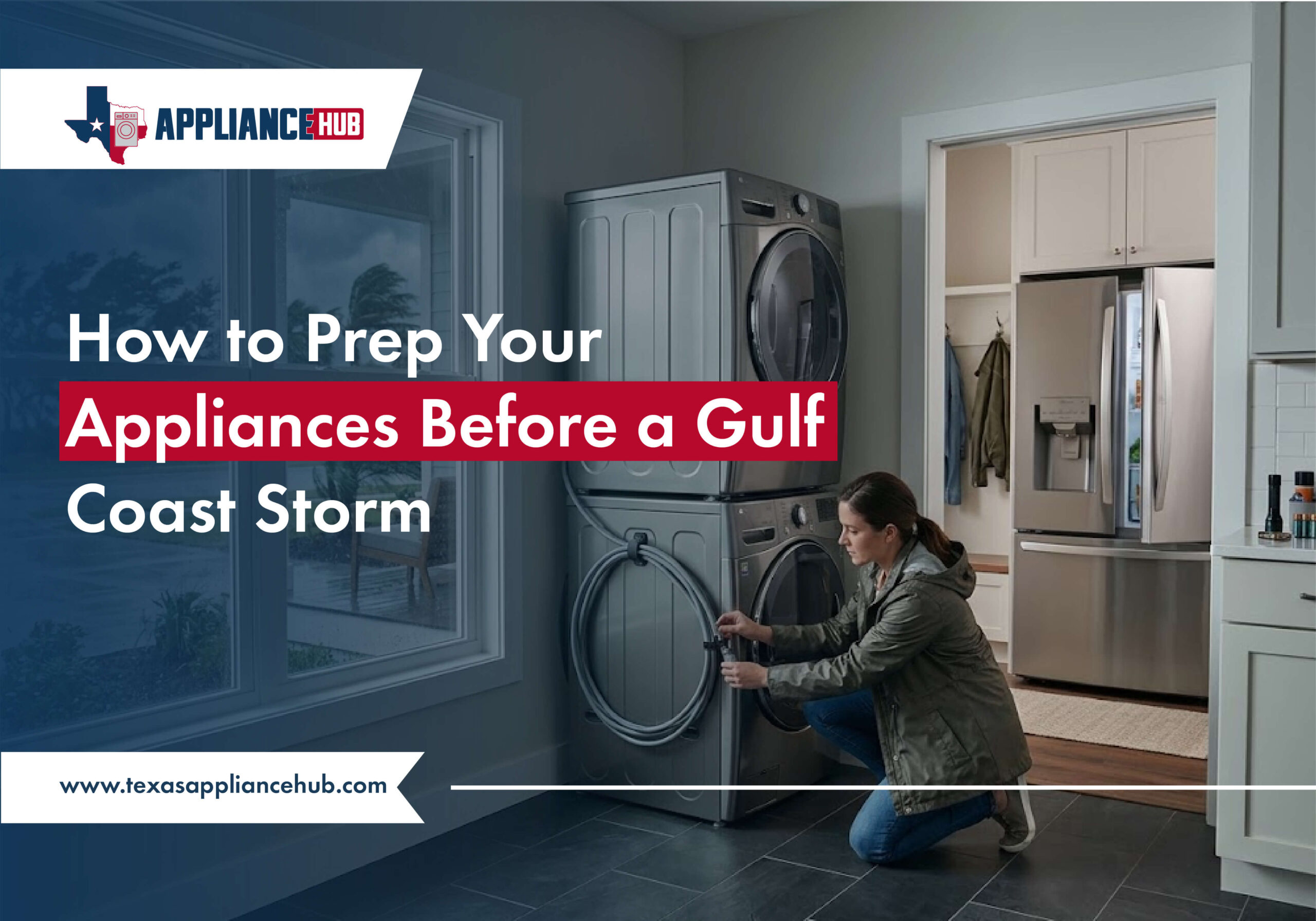
Living along the Gulf Coast means storm season is a regular part of life. Between heavy rain, flooding, and power outages, your home appliances can take a serious hit if they are not properly prepared. Taking a little time before a storm arrives can save you from costly repairs or replacements once it passes.
Here is a room by room guide to help you protect your major appliances before the next storm rolls in.
Kitchen Appliances
Refrigerator and Freezer
Your fridge and freezer are often the most vulnerable when it comes to extended power outages. Before a storm hits, set both to their coldest settings so they build up extra cold reserve. Freeze water bottles or gel packs ahead of time. They act as ice packs and help keep the freezer cold longer if the power goes out.
If flooding is a concern in your area, consider unplugging the unit once the storm is imminent and, if possible, elevate it off the floor using blocks or risers.
Oven, Stove, and Microwave
Unplug these appliances before the storm if you are evacuating or if flooding is a real possibility. Power surges are common during storms, and unplugging protects sensitive electronics inside newer models.
Dishwasher
Run a final load before the storm so it is clean and empty. If you expect flooding, shut off the water supply valve to prevent backflow issues.
Laundry Room
Washer and Dryer
If your laundry room is at ground level and flooding is a possibility, move these appliances to a higher spot if you can, or place them on cinder blocks. Disconnect the water hoses from the washer to prevent water damage from burst lines during a power surge or pressure change.
Unplug both units ahead of the storm. This protects the internal control boards from power surges, which are one of the most common causes of appliance failure after a storm.
Whole Home Appliance Protection
Surge Protectors
Invest in whole home surge protection if you do not already have it installed. This single step can prevent thousands of dollars in appliance damage from lightning strikes or power grid fluctuations during a storm.
Unplug Nonessential Electronics
Beyond major appliances, unplug smaller electronics like microwaves, coffee makers, and countertop appliances. These are often overlooked but can be just as vulnerable to surges.
Elevate What You Can
If your area has a history of flooding, elevate appliances using risers, blocks, or platforms. Even a few inches of extra height can make the difference between a working appliance and a total loss.
Backup Power Planning
Know Your Wattage Needs
Before storm season begins, check the wattage requirements of your essential appliances, especially the refrigerator. This helps you choose the right generator or battery backup system size and avoid overloading it during an outage.
Test Your Generator Ahead of Time
If you own a portable generator, test it before storm season starts. The middle of a power outage is not the time to discover it will not start.
Consider a Secondary Refrigerator or Freezer
Many Gulf Coast households keep a smaller backup fridge or chest freezer specifically for storm season. These use less power and can run longer on a generator or battery system, helping preserve essentials during extended outages.
After the Storm
Once the storm passes and power returns, do not plug appliances back in right away. Wait until you are confident the power supply has stabilized, since sudden surges are common right after outages end. Inspect appliances for water damage before use, especially anything near ground level.
Final Thoughts
Storm prep is not just about boarding up windows and stocking up on water. Your appliances represent a significant investment in your home, and a little preparation goes a long way toward protecting them. Taking these steps before the next Gulf Coast storm can help you avoid unnecessary repairs, replacements, and stress during an already difficult time.